

If you’ve found yourself searching for an “Is my child a narcissist?” quiz, you’re probably feeling worried, confused, or even a little scared. Maybe your child seems unusually self-centered, dismissive of others’ feelings, or overly focused on getting their way. You’re not alone. Many parents notice behaviors that feel off and wonder whether they’re dealing with narcissistic child behavior or just a normal developmental phase.
Children naturally go through stages of selfishness, big emotions, and boundary testing. That’s part of growing up. But when behaviors like lack of empathy in children start to show up again and again, it’s normal to pause and ask deeper questions. This is especially true when entitled child behavior begins to affect family relationships, friendships, or school life.
This “Is my child a narcissist?” quiz is designed to help you reflect on patterns you may be seeing at home. It does not diagnose your child. Only a qualified mental health professional can assess or diagnose psychological conditions. What this quiz does offer is clarity. It helps separate age-appropriate behavior from ongoing traits that may need attention.
Most importantly, noticing these signs neither makes you a bad parent nor labels your child as “broken.” With awareness and support, change is possible for both you and your child.
Why Take This Narcissism Quiz?
Taking an “Is my child a narcissist?” quiz can help you slow down and look at behavior patterns more clearly. While some parents worry about childhood narcissism when they see repeated dismissiveness, emotional manipulation, or exaggerated self-importance, others simply want reassurance that what they’re seeing falls within normal development. Understanding narcissistic child behavior early allows parents to respond with guidance instead of punishment or denial.
Try uMobix parental monitoring tool
Understanding narcissistic child behavior early allows parents to respond with guidance instead of punishment or denial.
The Quiz: 20 Questions to Assess Narcissistic Traits
Before starting, remember: this “Is my child a narcissist?” quiz looks at patterns, not one-off moments. Answer honestly. It is not for us. It is for you.
- Does your child rarely show concern when others are hurt or upset?
- Do they dismiss other people’s feelings as unimportant?
- Do they struggle to apologize sincerely?
- Do they become irritated when attention is not on them?
- Does your child believe rules should not apply to them?
- Do they expect special treatment without earning it?
- Do they react strongly when they don’t get what they want?
- Do they exaggerate achievements to appear superior?
- Does your child twist stories to avoid responsibility?
- Do they blame others for their own mistakes?
- Do they use guilt or emotional pressure to control situations?
- Do they lie easily when it benefits them?
- Do friendships often end due to conflict caused by your child?
- Do they struggle to maintain long-term peer relationships?
- Do they show jealousy when others succeed?
- Do they lack interest in cooperation or compromise?
- Does your child react with anger or shut down when corrected?
- Do they see feedback as a personal attack?
- Do they refuse to accept fault, even with clear evidence?
- Do they hold grudges after being challenged?
Your Results: Understanding Narcissistic Behaviors
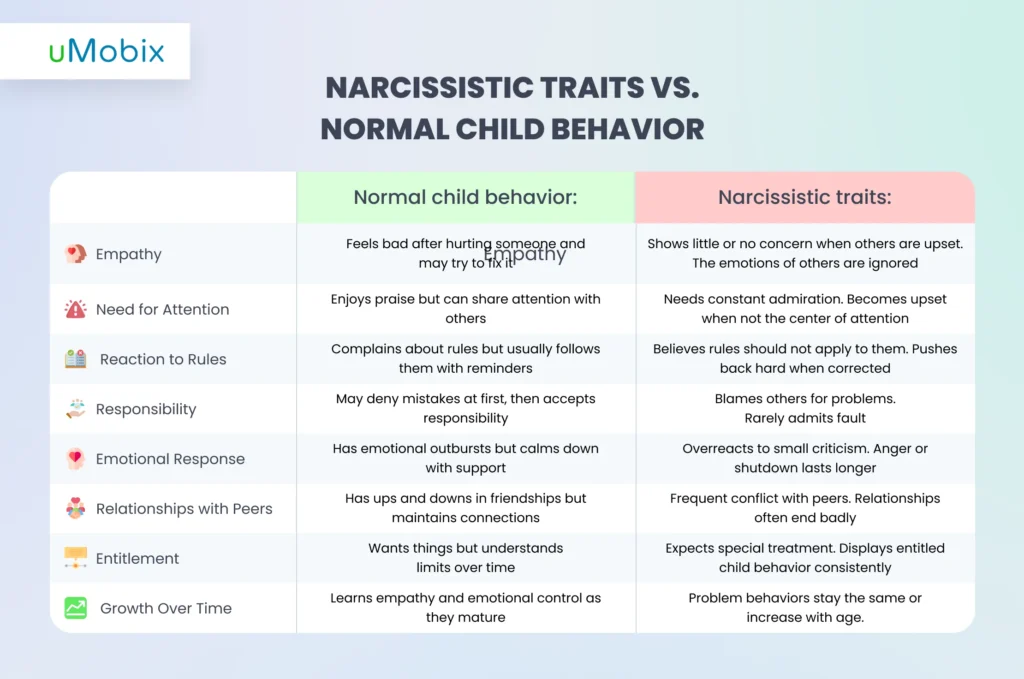
In this section, you will find out whether your kid has narcissistic child behavior and understand what should be done to solve the problem. One tough week, a sudden outburst, or a bad day doesn’t define your child, but repeated patterns do.
When these behaviors show again and again, they may point to something deeper than normal childhood frustration. A constant need for control, refusal to take responsibility, or dismissal of others’ feelings can quietly wear down relationships and create distance over time.
Remember, many children act out when they feel stressed, insecure, or unheard. School pressure, family changes, or social struggles can bring out narcissistic child behavior that looks concerning at first glance.
Think of your results as a wake-up call, not a verdict. They highlight areas where your child may need guidance, structure, or emotional support. With patience, awareness, and the right tools, families can turn things around. Stepping in early helps children learn empathy, emotional regulation, and healthier ways to connect with others.
15-20 “Yes” Answers – High Concern: Multiple Narcissistic Traits Present
A high score may point to repeated lack of empathy in children and emotional manipulation. When these behaviors show up again and again, they can resemble early narcissistic personality traits. This is often when parents start to feel worried, frustrated, or even helpless.
This result does not mean your child is permanently narcissistic or beyond help. It means the behaviors are strong enough that they shouldn’t be ignored. Without guidance, these patterns can settle in and slowly damage relationships, trust, and emotional connection.
A child psychologist or family therapist can help uncover what’s driving the behavior: stress, learned patterns, insecurity, or unmet emotional needs. With the right support, children can learn empathy, emotional regulation, and healthier ways to connect with others.
8-14 “Yes” Answers – Moderate: Some Concerning Patterns
This score often points to mixed behavior. Your child may show warmth and empathy in calm moments, but narcissistic child behavior can flare up during stressful situations, big transitions, or times when they feel insecure or out of control.
This is the stage where what you do as a parent truly matters. Clear boundaries, consistent consequences, and patient emotional coaching can help your child turn these patterns around before they become entrenched.
Watch closely for repeated signs such as passive-aggressive behavior, blaming others for mistakes, or constantly seeking validation and praise. These behaviors aren’t a reflection of a bad character. They’re often signals of unmet emotional needs or difficulty managing strong feelings.
Pay attention now, because ignoring these patterns can let them snowball. The earlier you step in with guidance and support, the better the chance your child will learn empathy, accountability, and healthier ways to handle relationships. With awareness and action, you can steer their behavior in a positive direction before small issues grow into lasting problems.
0-7 “Yes” Answers – Low Concern: Normal Developmental Behavior
A low score usually points to normal, age-appropriate development. Many children go through phases where they test limits, seek attention, or struggle to fully understand other people’s feelings. This is part of learning who they are and how the world works. These behaviors on their own do not suggest childhood narcissism, and they are common at many stages of growth.
Still, this result doesn’t mean parenting work is finished. Emotional skills are learned over time. Children in this range benefit greatly from ongoing guidance, clear expectations, and gentle correction. Thus, teaching empathy, responsibility, and emotional expression helps prevent small issues from turning into bigger ones later on.
Pay attention to how your child reacts when they’re disappointed, corrected, or told no. These moments are powerful teaching opportunities. Calm explanations, consistent boundaries, and emotional validation help children learn that their feelings matter, but so do the feelings of others.
With steady support and using reliable and undetectable monitoring child’s phone apps, most children naturally grow more empathetic, flexible, and emotionally aware.
Addressing Narcissistic Behavior: Next Steps After the Quiz
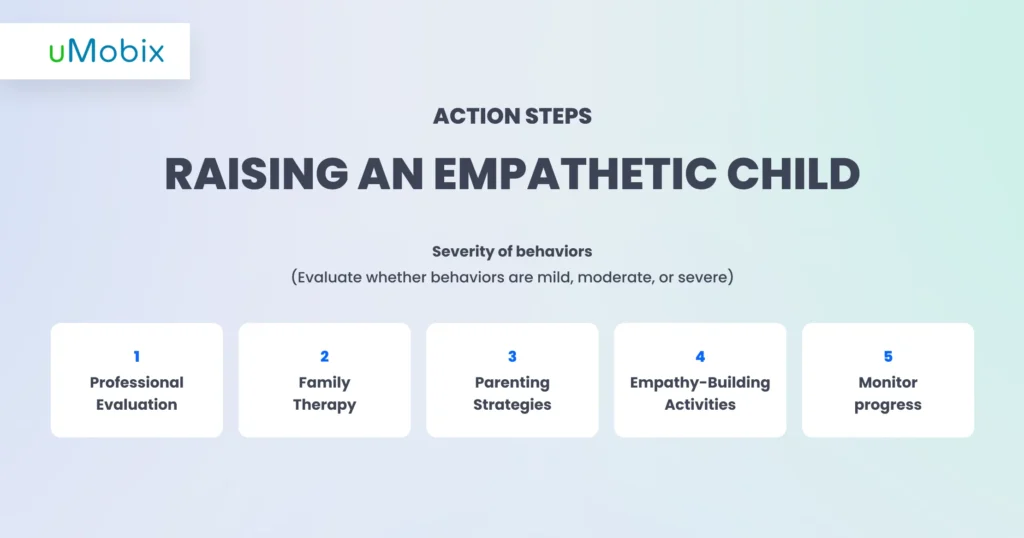
No matter the score, this “Is my child a narcissist?” quiz is a starting point, not an ending. Focus on patterns, not labels. If behaviors are affecting your child’s relationships or emotional health, outside support can help.
This is what you must:
- Try family therapy, parenting programs, and empathy-building activities.
- Encourage accountability without shame.
- Correct behavior while still validating emotions.
- Pay attention to stressors like school pressure, social rejection, or online conflict.
- Speak about their online life.
- Teach them trust you.
- Talk openly without judgment.
uMobix: Monitor Your Child’s Social Behaviors
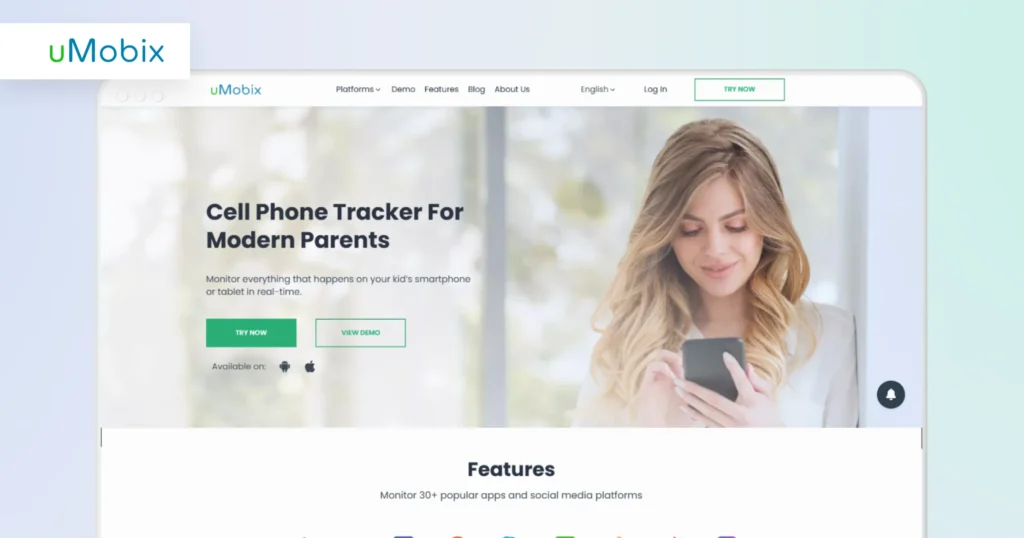
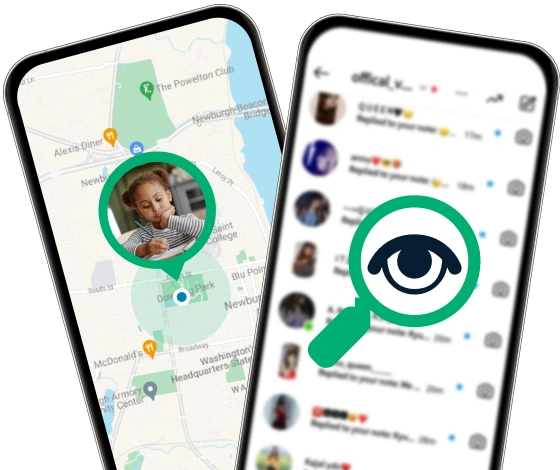
Understanding your child’s behavior doesn’t stop at what you see at home. A large part of how children express entitlement, empathy, or manipulation now happens online. That’s where tools like uMobix become especially helpful. uMobix works on Android devices, giving parents insight into how their child interacts with others in digital spaces where many concerning patterns first appear.
Instead of guessing or relying on fragments of information, uMobix helps you see the full picture. This is not about control or punishment. It’s about awareness. When parents understand how their child communicates, reacts, and treats others online, they can step in earlier, ask better questions, and guide behavior in healthier ways.
Key features include:
- Track their connections on social media and mental health by checking shared text messages, files, videos, etc.
- Identify cyberbullying behavior, whether your child is the perpetrator or the victim
- Track concerning patterns over time instead of isolated incidents
- See how your child treats others digitally during conflict or stress
- Detect manipulation or lying before it becomes a habit
- Gain a clearer understanding of your child’s full behavior picture
- Identify problematic interactions early, when change is easier
- Detect installed dangerous apps that may negatively impact your kiddo’s behavior
Understanding a child’s behavior today means looking beyond what happens at home or school. Many emotional patterns now show up online first. Children communicate, argue, and form relationships through messages, social media, and apps. This is where parental control apps like uMobix can help parents stay aware without guessing.
uMobix works on Android devices and gives parents a clearer view of how their child interacts in digital spaces. It allows you to see social conversations, tone changes, and repeated behaviors that may not be visible offline. This matters because online actions often reflect real emotions such as anger, insecurity, or a need for control.
One key benefit is early awareness. Instead of reacting after a problem escalates, parents can notice concerning behavior sooner. This includes patterns such as blaming others, harsh language during conflict, or emotional manipulation in messages. Seeing these signs early makes it easier to guide behavior calmly and constructively.
uMobix also helps parents understand whether their child is involved in bullying, either as a target or as the one causing harm. Knowing this allows you to step in with support, set clear boundaries, and teach empathy before damage is done.
Most importantly, uMobix helps parents see behavior in context. It connects online actions to real-life emotions, helping families respond with understanding rather than punishment. The goal is not constant control, but informed parenting.
Want to know what happens with your kid?
Try uMobix and understand your child’s behavior completely
Try NowConclusion
This “Is my child a narcissist” quiz helps identify patterns that may need attention, not labels that define your child forever. While the quiz can highlight possible concerns, only a professional can provide a diagnosis or treatment guidance.
Awareness is powerful. When parents notice narcissistic child behavior early and respond with structure, empathy, and support, children have a better chance of growing into emotionally healthy adults. Tools like uMobix can help you understand behavior across both offline and online spaces.
Early intervention, consistent guidance, and informed monitoring can truly change the path forward for your child and your family.
Take the quiz, reflect honestly, and take the next step with confidence.
Latest posts
- How to Find Deleted Reels on Instagram: 5 Methods That Actually Work
- How to See Deleted Stories on Instagram: 6 Working Methods (2026)
- How to See Unsent Messages on Instagram: 5 Proven Methods (2026)
- Facebook Location Tracker: How to Find Location by Facebook Account?
- Sign up for Spam Calls and Texts: Your Safety Guide


