

Parenting is not easy. It doesn’t come with a manual. Although most parents do their best with the tools, experiences, and emotions they have at the moment, many caring parents quietly wonder whether some of their reactions, words, or rules might be doing more harm than good. This parental emotional abuse test is designed for those who are searching for a genuine answer about themselves as parents.
Many people think that toxic parenting is obvious, but the fact is that it’s not so. It often hides in everyday interactions, sarcasm used too often, dismissing feelings, constant criticism, or pressure that feels “motivational” to adults but overwhelming to children. These emotional abuse signs don’t necessarily come from bad intentions. They often stem from stress, unresolved trauma, or learned patterns passed down through generations.
So, if you’ve ever worried about toxic parenting, that concern alone says something important: you care. Taking a parental emotional abuse test doesn’t mean you’ve failed as a parent. It means you’re willing to look honestly at your behavior and how it may affect your child’s emotional safety. When parents can name harmful dynamics, they can begin to change them, creating a safer, more supportive environment for their kids.
Try uMobix parental monitoring tool
Take care of your child online behaviour and understand them better
Why Take a Parental Emotional Abuse Test?
Ever wondered if your parenting might unintentionally hurt your child? Many parents worry about being “too strict” without knowing where healthy discipline ends and emotional harm begins. A parental emotional abuse test offers a clear way to reflect on everyday interactions, reactions, and communication habits.
Taking the test can help you:
- Notice behaviors that may lead to psychological abuse in children or affect their self-worth and emotional security.
- See the difference between healthy discipline and responses driven by stress, fear, or shame.
- Break habits inherited from your own upbringing.
- Improve communication and create a safer emotional environment.
Remember, Rome wasn’t built in a day. Changing patterns takes time, patience, and small, consistent steps.
By reflecting honestly, you gain insight, awareness, and the power to create a healthier, happier relationship with your child, helping them grow with emotional safety and confidence.
The Test: 25 Questions to Evaluate Your Parenting Patterns
Have you even caught yourself wondering if some of your reactions might hurt more than help? This parental emotional abuse test is a simple way to pause and reflect. It’s made up of 25 “yes” or “no” questions about everyday parenting moments. There are no right or wrong answers. The goal isn’t to judge. It is to understand your impact and support your child more healthily.
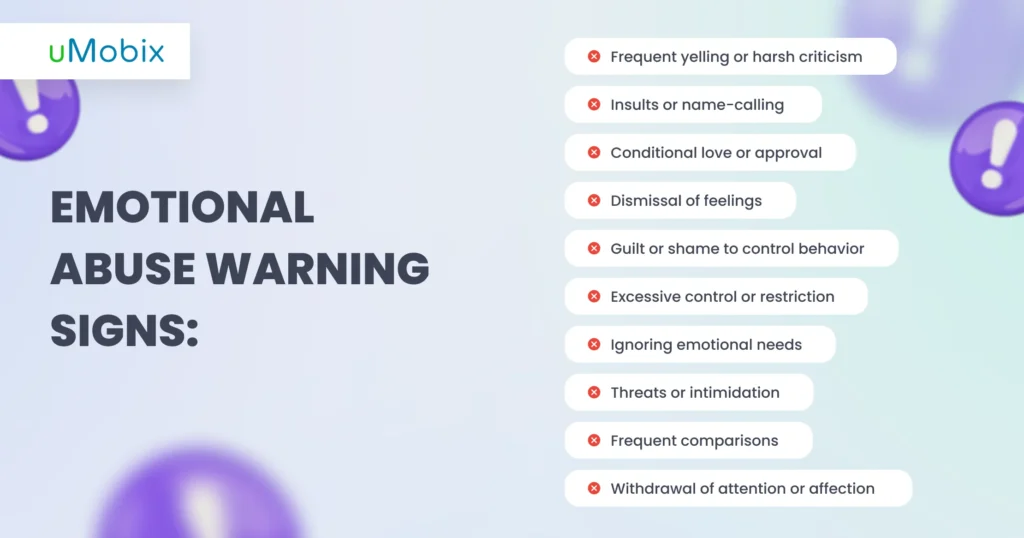
- Do you often yell or raise your voice when frustrated?
- Do you insult or mock your child’s behavior or personality?
- Do you use sarcasm to “teach lessons”?
- Do you criticize more than you praise?
- Do your words linger with your child long after conflicts end?
- Do you guilt your child to gain compliance?
- Do you withdraw affection when upset?
- Do you compare your child negatively to others?
- Do you make love or approval feel conditional?
- Do you minimize your child’s emotional reactions?
- Do you ignore emotional needs because you’re busy or stressed?
- Do you tell your child to “get over it” often?
- Do you avoid emotional conversations?
- Do you dismiss fears as silly or dramatic?
- Do you rarely ask how your child feels?
- Do you monitor excessively without explanation?
- Do you limit friendships as punishment?
- Do you discourage independence out of fear?
- Do you demand obedience without discussion?
- Do you isolate your child during conflicts?
- Do you threaten abandonment or punishment to gain control?
- Do you use fear to enforce rules?
- Do you intimidate with authority rather than guidance?
- Do you scare your child into compliance?
- Do you believe fear teaches respect?
Your Results: Understanding Emotional Abuse Patterns
Understanding your results helps put emotional abuse signs into perspective. This parental emotional abuse test is a starting point, not a diagnosis.
18-25 “Yes” Answers – Critical: Severe Emotional Abuse Patterns Present
A high number of “yes” answers usually indicates that your parenting involves repeated yelling, emotional pressure, excessive control, or intimidation. You might lash out when stressed, even without meaning to hurt your child. Over time, these patterns can seriously affect a child’s emotional growth. Children may become anxious, withdrawn, or unsure of their own feelings and worth.
This does not mean you are a “bad” or emotionally abusive parent. Many parents fall into toxic parenting patterns without realizing it. Often, they repeat what they experienced growing up. What matters now is noticing it and starting to change. The sooner you do, the better it is for both you and your child.
At this stage, the emotional abuse signs often overlap with psychological abuse in children. Some kids may feel invisible or unloved, which is a form of emotional neglect. Left unchecked, it can affect long-term confidence and emotional security. Therefore, you need outside help (parenting classes, therapy, family counseling).
10-17 “Yes” Answers – Warning: Concerning Emotional Patterns
Scoring in this range usually means your parenting includes both supportive moments and some behaviors that may unintentionally cause harm. You likely care deeply about your child, but during stress, fatigue, or conflict, certain reactions such as emotional pressure, dismissing feelings, or being overly controlling can slip in without you noticing.
These patterns don’t always look or feel like abuse. In fact, many parents see them as “normal” ways to keep order or protect their child. Over time, though, they can lead to confusion around love, boundaries, and emotional safety. Children may start to hide their feelings, doubt themselves, or feel responsible for managing adult emotions. This is where emotional neglect can slowly develop, even when there is love present.
The good news is that this stage is very changeable. Awareness now can prevent these behaviors from becoming stronger or more consistent emotional abuse signs. Pay attention to what triggers these moments: stress, fear, lack of sleep, or feeling out of control.
0-9 “Yes” Answers – Healthy: Generally Positive Parenting
A low score usually means your parenting style is emotionally supportive and generally healthy. You likely offer guidance, structure, and boundaries without relying on fear, shame, or constant pressure. Your child probably feels safe coming to you with problems, emotions, or questions, even when they’ve made mistakes. That sense of safety is one of the strongest protective factors for a child’s emotional development.
That said, no parent gets it right all the time. Stressful days, exhaustion, or outside pressure can still lead to sharp words or missed emotional cues. What matters most isn’t avoiding mistakes altogether. It’s what happens after. Apologizing, explaining, and reconnecting teach children that relationships can be repaired after conflict.
Parents in this range often model emotional intelligence without realizing it. By listening, validating feelings, and setting fair limits, you show your child how to manage emotions in a healthy way. Staying open to feedback as your child grows, especially during teenage years, helps maintain trust and connection.
Keep checking in, both emotionally and practically. Children change, challenges evolve, and even strong parenting benefits from reflection.
Breaking the Cycle: Next Steps After the Test
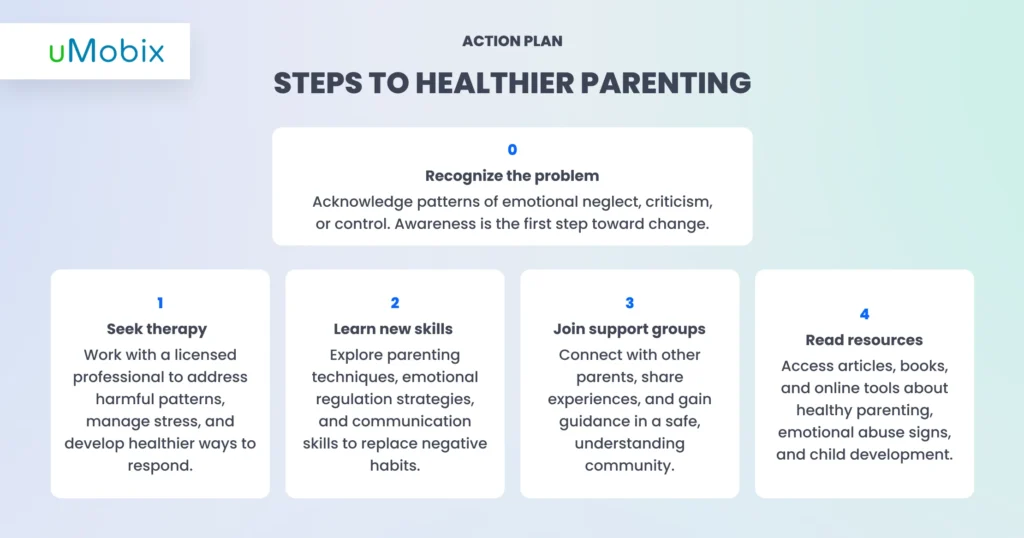
Taking a parental emotional abuse test is a brave and important step. It shows that you care deeply about your child and want to understand how your actions might affect their feelings and emotional health. If the results worry you, try not to dwell on guilt. Many harmful patterns are learned, not chosen, and the good news is that they can be changed with attention and effort.
Here are some ways to start:
- Listen before responding: Hear your child’s feelings, even when you need to correct behavior.
- Check in often: Small talks about their day or emotions can help prevent emotional neglect and build trust.
- Seek help when needed: Parenting classes, family therapy, etc., can guide you through stress, conflicts, and discipline without fear or criticism.
- Pay attention to their digital world: Kids can use social media apps where they can become victims of bullying, online predators, and toxic interactions. Check who they communicate with and what the character of these communications is. It will help you protect against contributing to psychological abuse in children.
By noticing your patterns, spotting emotional abuse signs, and taking small, consistent steps, you can break cycles of toxic parenting, repair trust, and create a safe, supportive home where your child feels seen, heard, and loved.
uMobix: Monitor and Protect Your Child’s Emotional Well-Being

Once you’ve reflected on your parenting patterns, the next step is making sure your child feels safe everywhere, not just at home. Today, emotional harm often happens online, where messages, apps, and social interactions can influence a child’s mood and self-esteem in ways parents may not immediately notice. Even well-intentioned guidance at home can’t fully protect them if their digital world is stressful or unsafe.
uMobix: Monitor and Protect Your Child’s Emotional Well-Being
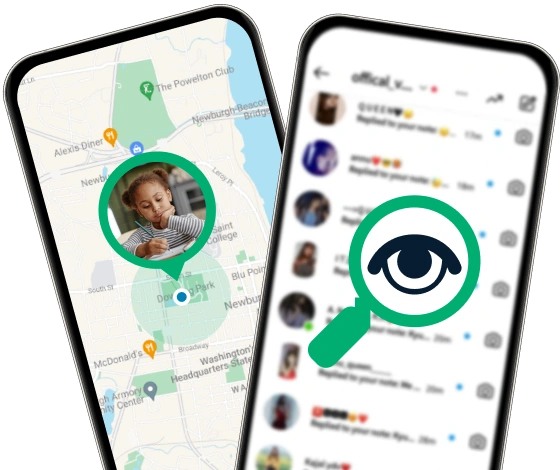
Monitor social media, track location, check call and messages, control screen time and much more.
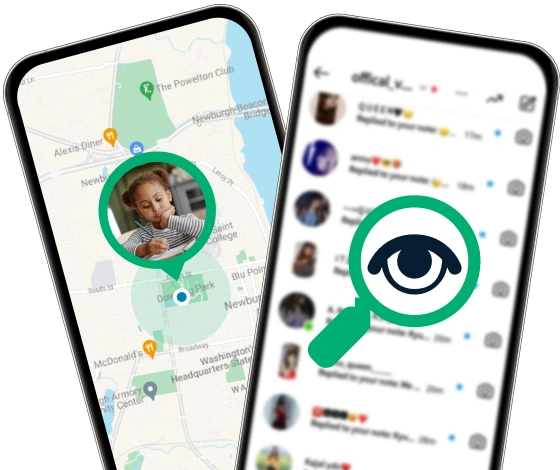
Try uMobixThat’s where tools like uMobix can help. It gives parents insight into their child’s online life without fear-based surveillance or invading trust. By understanding patterns, parents can spot early signs of distress, identify changes in behavior, and recognize potential risks before they escalate. This proactive approach helps children feel supported, both emotionally and digitally. uMobix offers social media tracking, text message and call tracking, GPS tracking, phone control features, and much more.
With uMobix, parents can:
- Monitor concerning messages and conversations (sent, received, and even deleted)
- Identify emotional withdrawal or mood changes
- Track behavioral patterns over time
- Detect cyberbullying and toxic peer interactions
- Recognize exposure to online predators
- Spot signs of grooming early
- Track their real-time location
- Check your kid’s social media connections
- Stay aware of whether your child has not installed any dangerous apps for kids on their Android phone
- Support mental health challenges linked to social media depression
- Apply balanced parental controls with transparency
uMobix emphasizes connection, not control. It empowers parents to protect their child’s mental and emotional well-being while maintaining trust and independence. By combining self-reflection with monitoring and guidance, you can create a safe, nurturing environment where your child feels understood, supported, and protected.
Conclusion
This parental emotional abuse test isn’t meant to judge. It’s a mirror to help you see patterns you might not notice in everyday parenting. It’s a starting point for reflection, growth, and building a stronger, healthier connection with your child. Recognizing signs of emotional neglect, repeated criticism, or behaviors inherited from your own upbringing is a courageous first step toward change.
Parenting is a journey, and no one gets it perfectly. Seeking support through education, counseling, or parenting resources is a sign of commitment, not failure. Tools like uMobix can help you understand your child’s digital world, spot early warning signs, and protect their mental and emotional well-being without invading trust.
Awareness and action together create the foundation for safer, more supportive parenting. By reflecting on your patterns, learning healthier strategies, and monitoring your child’s well-being online, you can protect their emotional and mental health.
Take the next step today. Use uMobix to safeguard your child’s emotional well-being and build a stronger, trusting relationship.

Latest posts
- How to Find Deleted Reels on Instagram: 5 Methods That Actually Work
- How to See Deleted Stories on Instagram: 6 Working Methods (2026)
- How to See Unsent Messages on Instagram: 5 Proven Methods (2026)
- Facebook Location Tracker: How to Find Location by Facebook Account?
- Sign up for Spam Calls and Texts: Your Safety Guide


