

Every parent has wondered at some point whether they’re doing “too much,” “not enough,” or something in between. Many families don’t follow one strict model. Instead, parents naturally blend different types of parenting styles depending on stress, personality, and the situation in front of them.
Your parenting approach shapes how your child learns boundaries, confidence, emotional regulation, and independence. Some parents lean toward structure and rules. Others emphasize warmth and flexibility.
A parenting style quiz isn’t about judging your choices. It’s about understanding your habits, reactions, and priorities so you can parent with more intention. This quiz helps you spot your dominant patterns. It highlights how you respond to discipline, communication, emotional needs, and independence. Most parents will recognize pieces of themselves in more than one category. That’s normal.
The goal of this parenting style quiz is to identify strengths you can build on and habits that might need adjusting. Small shifts in awareness can create meaningful change. When you understand your natural tendencies, you can make conscious decisions instead of reacting on autopilot. That’s where real growth begins.
Why Identify Your Parenting Style
Understanding your parenting style helps you see why you and your child act the way you do. It can explain repeated arguments, your child’s reactions, and how your rules affect their behavior. Learning about the different types of parenting styles lets you compare what you do naturally with what you want to do.
Parents who think about their habits can use effective parenting strategies more often. You start to see patterns: when to set rules, when your child needs comfort, and when to give them freedom.

How to set up rules for your child online usage?
Try uMobix – child monitoring tool for smart parenting
Try uMobixThis is not about being perfect. It is about matching your actions with your values. When you do this parenting style quiz, your parenting becomes more intentional and less about reacting in the moment.
The Quiz: 30 Questions to Identify Your Parenting Style
This parenting style quiz helps you see how you naturally respond to discipline, communication, emotional support, and independence. For each question, choose the answer that feels closest to what you usually do, not what you think you should do.
When your child breaks a rule, you usually:
- Calmly explain why it was wrong and discuss how to make it right
- Immediately enforce punishment to show authority
- Let it go if your child seems upset or emotional
- Feel unsure and either overreact or ignore it
Rules at home are:
- Clear, fair, and often discussed together
- Strict, firm, and rarely questioned
- Flexible depending on your mood or the situation
- Often unclear, leaving your child guessing
If your child argues about a consequence:
- Listen first, then respond thoughtfully
- Shut the discussion down to maintain control
- Give in to avoid stress or a fight
- Avoid addressing it and hope it passes
Discipline feels like:
- A way to teach and guide
- A way to enforce respect and obedience
- Something to keep the peace in the moment
- A stressful task you just want to end
When routines are broken:
- You gently remind and redirect
- You respond firmly to reinforce rules
- You shrug and let it slide
- You feel frustrated and avoid following up
If misbehavior happens repeatedly:
- You stay calm and consistently guide
- You escalate punishment
- You warn, but often don’t act
- You feel drained and sometimes withdraw
Household expectations are:
- Clear, structured, and explained
- Strict and non-negotiable
- Flexible and negotiable
- Rarely discussed or inconsistent
You see discipline as:
- A chance for your child to learn
- A way to maintain authority
- A last resort to avoid conflict
- Something unpleasant you want to avoid
When your child wants to talk about a problem:
- You give full attention and try to understand their feelings
- You focus on what they did wrong and correct them
- You listen briefly but don’t get too involved
- You avoid the conversation or change the topic
If your child shares something exciting:
- You celebrate and show genuine interest
- You acknowledge it, but focus on responsibility
- You nod but quickly move on
- You ignore it or act distracted
During disagreements, you:
- Stay calm and explain your point clearly
- Insist they accept your rules immediately
- Let them win to keep the peace
- Walk away or stop talking
When your child expresses fear, sadness, or frustration:
- You validate feelings and offer comfort
- You remind them to follow rules despite feelings
- You try to distract them from their emotions
- You feel uncomfortable and avoid the topic
How often do you ask your child for their opinion or ideas?
- Frequently, you take their thoughts seriously
- Occasionally, mostly when it doesn’t affect the rules
- Rarely, only if it’s convenient
- Almost never
When your child makes a mistake and tells you:
- You listen without judgment and guide them
- You correct them and stress the consequences
- You downplay it or give a quick comment
- You ignore it or react negatively
You explain rules and expectations by:
- Discussing reasons and encouraging questions
- Giving instructions clearly, expecting compliance
- Mentioning them casually without much detail
- Assuming they should know
When your child is upset, you usually:
- Sit with them and help them calm down
- Remind them to follow the rules first
- Distract them or try to cheer them up quickly
- Ignore their feelings or leave them alone
You show affection by:
- Hugs, praise, and kind words often
- Only when they meet expectations
- Occasionally, when it feels convenient
- Rarely or not at all
You celebrate your child’s successes by:
- Acknowledging effort and sharing joy
- Mentioning it briefly, but focusing on responsibility
- Doing something small without much excitement
- Overlooking achievements
When your child asks for help:
- You support and guide patiently
- You provide instructions and expect them to follow
- You help only if it’s easy for you
- You avoid helping or say they should manage
You comfort your child when they fail:
- Reassure them and discuss ways to improve
- Remind them of expectations
- Brush it off to move on quickly
- Ignore or criticize
You encourage emotional expression by:
- Asking how they feel and listening
- Correcting feelings that seem inappropriate
- Letting them talk only a little
- Avoiding emotions
You notice your child’s moods and feelings:
- Often and respond thoughtfully
- Occasionally, mainly if it affects behavior
- Rarely, unless it’s extreme
- Almost never
You allow your child to make small choices:
- Often, guide them gently
- Sometimes, only if it doesn’t break rules
- Rarely, usually decide for them
- Almost never
Your child’s mistakes are:
- Learning opportunities you discuss
- Reasons for consequences
- Ignored or lightly commented on
- Criticized or punished
You encourage problem-solving by:
- Asking questions and helping them find solutions
- Telling them exactly what to do
- Letting them figure it out if convenient
- Doing it for them
You let your child handle age-appropriate responsibilities:
- Regularly, with support as needed
- Only when supervised strictly
- Occasionally
- Rarely or never
You allow your child to express opinions:
- Frequently, take them seriously
- Sometimes, but within limits
- Rarely
- Almost never
When your child wants independence:
- You encourage it safely
- You limit it to control outcomes
- You feel unsure and sometimes allow it
- You discourage it
You encourage them to try new things:
- Often, even if they might fail
- Only with guidance and rules
- Sometimes, depending on mood
- Rarely
When they face challenges alone:
- You support quietly and let them try
- You step in to control the situation
- You step back and hope they manage
- You ignore or avoid it
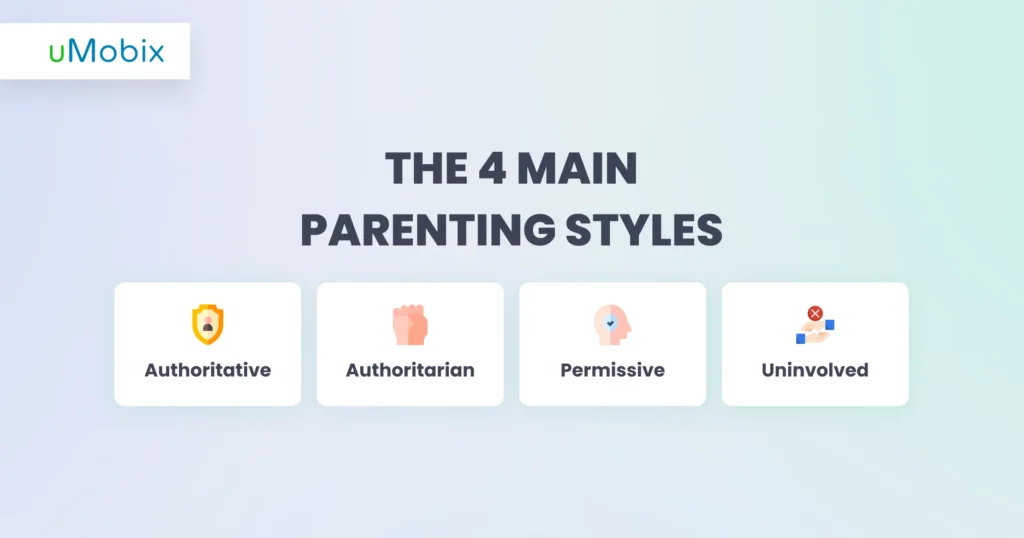
This visual guide shows the four main types of parenting styles, helping you understand your approach and how it affects your child. Each style combines different levels of warmth and control:
1. Authoritative
Characteristics: Parents are loving and supportive while setting clear rules and expectations. They guide children with reasoning and consistency. Children usually feel secure, confident, and motivated.
2. Authoritarian
Characteristics: Parents enforce strict rules with little flexibility or emotional support. Focus is on obedience. Children may follow rules but can feel anxious, withdrawn, or less confident in decision-making.
3. Permissive
Characteristics: Parents are very nurturing and supportive, but set few boundaries. They act more like friends than authority figures. Children often feel loved but may struggle with structure, self-discipline, and limits.
4. Uninvolved
Characteristics: Parents are detached, provide little guidance or emotional support. Children may feel neglected, struggle with self-confidence, and have difficulty with rules and social behavior.
Your Results: Understanding Your Parenting Style
Your results in this parenting style quiz show which parenting style you use most often. Keep in mind: no parent fits perfectly into one style. How you parent depends on stress, your environment, and your child’s personality.
Seeing patterns in your parenting helps you notice your strengths and areas to improve. Some types of parenting styles help children become independent. Others give structure or build closeness.
Mostly A’s – Authoritative Parenting: The Balanced Approach
Parents who land here tend toward authoritative parenting – a balance of warmth, structure, and clear expectations. This parenting style is often linked to strong emotional and behavioral outcomes because it combines guidance with respect. Children raised in this environment usually understand why rules exist, not just that they must follow them.
Instead of relying on fear or punishment, discipline becomes a teaching moment. Parents explain consequences, listen to their child’s perspective, and guide problem-solving. This approach builds trust and encourages children to think about their choices rather than react out of pressure.
Kids raised this way often grow more confident, independent, and emotionally aware. They’re more likely to communicate openly and take responsibility for mistakes.
Mostly B’s – Authoritarian Parenting: The Strict Disciplinarian
This parenting style is built around structure, rules, and authority. Expectations are clear, and children know exactly what is allowed and what isn’t.
But when discipline outweighs conversation, children may start holding their feelings in. They might worry about making mistakes or feel like their voice doesn’t matter. Over time, this can affect confidence and emotional expression. It doesn’t mean the approach is harmful. It just means balance is important.
Parents who favor this style often care deeply about safety, order, and respect. Those are real strengths. The opportunity for growth comes from increasing emotional connection in daily interactions. Simple changes, like explaining why a rule exists or listening before reacting, can make a big difference.
Mostly C’s – Permissive Parenting: The Lenient Friend
Permissive parenting is built around warmth, closeness, and emotional comfort. Parents who lean this way want their child to feel safe, heard, and supported. They tend to be nurturing, flexible, and understanding, often prioritizing the relationship over strict rules.
The strength of this approach is the connection. Kids raised in this environment often feel deeply loved and emotionally secure. They may grow up expressive, creative, and comfortable communicating their needs. Parents are usually quick to comfort, listen, and adapt to their child’s emotions.
The challenge appears when limits are unclear or inconsistent. Without a predictable structure, children may struggle with self-discipline, frustration tolerance, or respecting setting boundaries. They might test limits simply because they’re unsure where those limits exist. Over time, this can lead to power struggles or difficulty following rules outside the home.
Simple routines, clear expectations, and calm follow-through help children learn responsibility while keeping the warm connection intact. When affection is paired with consistent guidance, kids gain both emotional security and the skills they need to navigate rules, disappointment, and independence with confidence.
Mostly D’s – Uninvolved Parenting: The Detached Parent
This parenting style has low warmth and low structure. Parents may be physically there but feel tired or stressed. Often, this is not a choice. Stress, burnout, depression, money problems, or feeling overwhelmed can make it hard to stay fully engaged with your child.
For children, this can be confusing. Without clear guidance or attention, they may struggle with self-esteem, emotions, or trusting others. Some kids try to do everything on their own too early, while others act out to get attention. These reactions are not permanent. They show a need for more connection.
The good news is that small steps can make a big difference. Daily check-ins, simple routines, or asking about your child’s day can start rebuilding safety and trust. Setting small, clear rules and following through gradually also helps.
Parents in this situation often need support too. Getting help, talking to friends or professionals, or using community resources can give you more energy. When you become more present, children feel seen, safe, and supported.
Mixed Results – Blended Parenting Style
Most parents don’t fit neatly into one box. Real life is messy, and many families naturally rotate between different types of parenting styles depending on stress, time, and circumstances. You might be calm and collaborative one day, then strict and reactive the next. That doesn’t make you inconsistent. It makes you human.
This kind of situational parenting often shows up when emotions run high or routines break down. Fatigue, work pressure, or family stress can shift how you respond in the moment. The key is noticing patterns. Are your reactions driven by intention, or are they happening automatically?
Identifying your dominant parenting approach helps you separate conscious choices from emotional reactions. When you understand what triggers certain responses, you gain more control over how you show up. Instead of swinging between extremes, you can blend warmth, structure, and flexibility in a way that aligns with your values.
Blended parenting isn’t about perfection. It’s about awareness. Small adjustments lise pausing before reacting, setting clearer expectations, or listening more closely, can bring balance. Over time, intentional choices create a steadier environment where both parent and child feel more secure and understood.
Adapting Your Parenting Style: Growth Strategies
Parenting changes as children grow, and your parenting style can evolve too. Reflection is the first step. Take a moment to notice which habits work well and which could use improvement. It could be consistency, listening, or staying calm during conflicts. Small adjustments add up over time. So, experiment to make more effective parenting strategies by setting clear boundaries, limits, rules, positive behaviors, victory celebrations, etc.
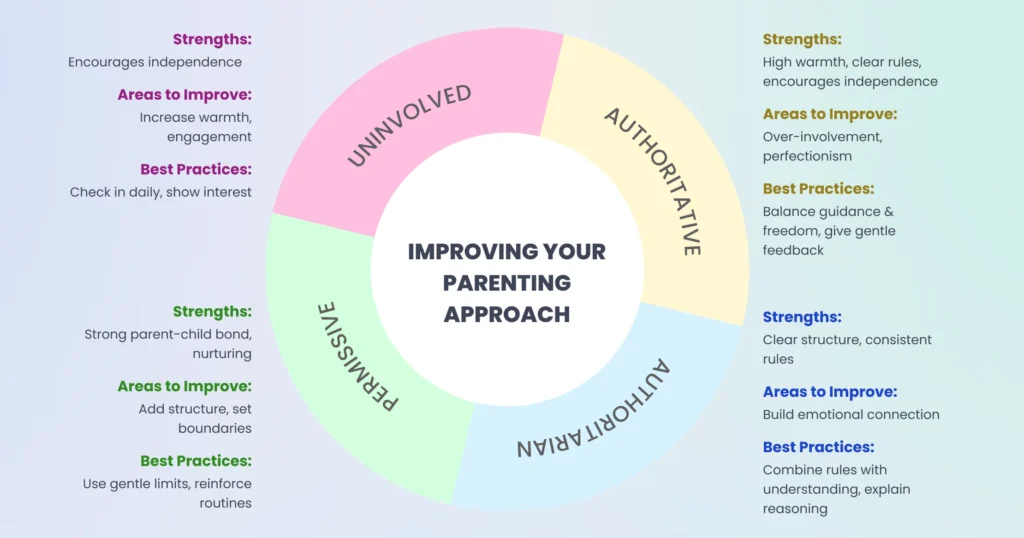
Change takes time, but practicing these steps often builds strong habits. Many parents find that mixing warmth with clear rules works best. Showing love while keeping structure helps children feel safe and understood. Paying attention to your reactions lets you turn habits into deliberate choices. You can guide your child without swinging between extremes.
Learning about toxic parenting signs or following screen time recommendations gives practical tips for daily life. Each small step – listening, setting limits, or being patient – makes your relationship stronger.
uMobix: Support Your Parenting Approach with Smart Monitoring

Parenting today isn’t just about what happens at home. Kids spend a lot of time online. Sometimes more than with friends in real life. uMobix helps parents see and understand their child’s digital life while supporting their parenting style. It’s not about controlling your child, but about staying aware, giving guidance, and keeping them safe.
Try uMobix parental monitoring app
It’s not about controlling your child, but about staying aware, giving guidance, and keeping them safe
Key features:
- Screen time management: Set healthy limits on how long your child uses apps or devices each day.
- App usage tracking: See which apps your child uses most and for how long. This helps you understand interests and detect risky or inappropriate apps.
- Location monitoring (GPS tracking): Check your child’s daily movements and routines.
- SMS and call checking: Review text messages and call logs to spot bullying, inappropriate contacts, or unusual behavior.
- Social media monitoring: Track your child’s activity on social platforms. Identify concerning interactions, cyberbullying, or harmful influences.
- Web browser checking: See which websites your child visits to help protect them from dangerous content or online predators.
- Downloaded apps monitoring: Know what new apps your child installs. Detect risky or age-inappropriate applications early.
uMobix works differently for each parenting style:
- Authoritative: Keep trust and safety in balance. Let your child make small choices while staying aware of risks and guiding them when needed.
- Authoritarian: Use monitoring to see how your child handles independence. Get helpful insights without adding pressure, so rules stay clear and fair.
- Permissive: Add gentle structure to their digital life. Alerts and reports guide your child without arguments or tension over devices.
- Uninvolved: Stay connected even if you’re busy. Small insights help you set routines, engage more, and build a stronger bond over time.
uMobix also pairs well with practical guides for parental controls, limiting cell phone use, and monitoring text messages. By combining monitoring with guidance, parents can protect, teach, and support their children, helping them grow safely both online and offline. Parent smarter with the right tools.
Conclusion
Understanding your parenting style is the first step to growing as a parent. No one is perfect, and most parents use a mix of styles depending on the situation. Learning your strengths and areas to improve helps you make small, positive changes every day.
Tools like uMobix can support your parenting approach by showing how your child spends time online, how they interact with others, and where guidance might be needed. Early awareness gives you a chance to step in before problems grow.
Remember, parenting is a journey. Each small change, like listening more, setting clear limits, or showing patience, helps your child feel safe, supported, and understood. Over time, these changes make your home more balanced and your relationship with your child stronger.
Take the quiz, reflect on your style, and use the right tools to parent smarter and guide your child with confidence.


Latest posts
- How to Find Deleted Reels on Instagram: 5 Methods That Actually Work
- How to See Deleted Stories on Instagram: 6 Working Methods (2026)
- How to See Unsent Messages on Instagram: 5 Proven Methods (2026)
- Facebook Location Tracker: How to Find Location by Facebook Account?
- Sign up for Spam Calls and Texts: Your Safety Guide


